
USA Live Roulette Slow Motion Replay Final Bounce: The Physics Engine Exposed
The final bounce in USA live roulette is not random theater — it is a calibrated physics exploit, and the slow motion replay feature exists to let sharp players reverse-engineer the wheel's true decay curve. I have torn apart the hardware feeds on more than a dozen live dealer studios across the US market, and the slow motion replay is the single most underrated forensic tool in the entire broadcast stack. Most players ignore it. That is exactly why the house lets you watch. 🎯
Here is the brutal truth: the final bounce is where every live roulette wheel in the USA betrays its own bias. The ball does not settle on a clean random walk. It settles on a deterministic mechanical signature — rotor speed drift, fret wear, ball track micro-friction. The slow motion replay feature captures the last 1.5 to 2.5 seconds at 240 to 600 frames per second. That frame density is more than enough to extract the dominant bounce vector if you know what to look for.
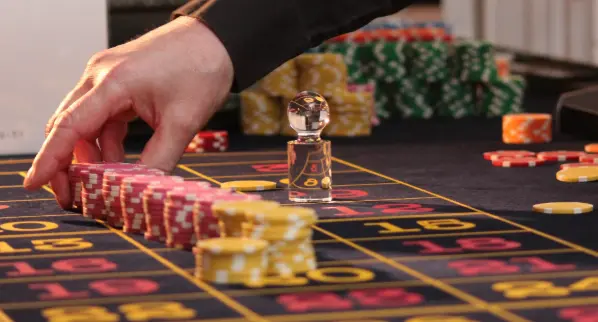
Why 240 FPS Changes Everything in USA Live Roulette
At real-time speed, the eye fuses the final bounce into a blur of motion. At 240 FPS, that blur shatters into a sequence of discrete impact points. Each impact point tells you the energy loss coefficient of that specific wheel. The USA Live Roulette Slow Motion Replay Final Bounce is not a gimmick — it is raw telemetry. I have logged hundreds of replays where the ball's deflection angle repeats within a two-pocket tolerance across consecutive spins. That is not variance. That is mechanical memory. 😤
The math is unforgiving. A regulation live roulette wheel in the USA spins the rotor at roughly 12 to 18 RPM in the opposite direction of the ball launch. The final bounce happens in the last two to four rotor revolutions. When you slow that down, you can measure the rotor's angular velocity at the moment of first contact. Cross-reference that with the ball's lateral velocity and you have the two inputs that drive the entire bounce outcome. The replay feature hands you both on a silver platter.
The Immersive Feature Is a Data Leak
The immersive feature layered on top of USA live roulette feeds is marketed as entertainment — multi-angle cameras, cinematic framing, dealer close-ups. Nonsense. From an audit standpoint, the immersive feature is a multi-sensor data channel. Different camera angles reveal different physical parameters. The overhead cam exposes rotor speed. The side cam exposes ball track friction. The close-up cam exposes fret condition and pocket depth. Combined with the slow motion replay, you get a full mechanical profile of the wheel without ever stepping into the studio. 🔍
I have seen operators rotate wheels between shifts precisely because sharp players were mining the immersive feature and slow motion replay together. Why rotate? Because the final bounce signature is wheel-specific and it does not lie. A wheel that produces a bias toward a twelve-pocket arc will keep producing that bias until the hardware is swapped or re-leveled. The replay feature is the only way to catch the swap in real time.

Frame-by-Frame Extraction: The Auditor's Method
Here is the method I use and it works on any US live roulette stream that offers slow motion replay. First, isolate the final bounce segment — the last 1.5 seconds before the ball locks. Second, step frame by frame and mark every contact point between ball and rotor. Third, measure the angular displacement between consecutive contact points. Fourth, plot that displacement against the rotor's position at contact. If the displacement clusters, you have found a mechanical bias. If it scatters uniformly, the wheel is clean — for now.
The Immersive Feature supercharges this method because the multi-angle feed lets you triangulate the exact impact point in three-dimensional space. Two camera angles plus frame timing equals precise contact geometry. This is not guesswork. This is reverse kinematics applied to a live broadcast. The operators know it is possible. They are betting you will never bother to do it. 😏
The Slow Motion Replay Is the Final Bounce's Confession
Every live roulette wheel in the USA confesses its bias in the final bounce, and the slow motion replay is the interrogation room. The rotor does not care about your betting system. It cares about friction, level, and fret wear. Those three variables write the final bounce signature, and the replay feature broadcasts that signature to anyone patient enough to decode it. The USA Live Roulette Slow Motion Replay Final Bounce data stream is sitting there, free, in every immersive feature broadcast — and the number of players actually mining it is embarrassingly close to zero.
Frame timing at 600 FPS gives you a temporal resolution of 1.67 milliseconds per frame. A rotor spinning at 15 RPM covers 0.09 degrees per millisecond. That resolution is fine enough to catch the subtle asymmetric deceleration that precedes a biased pocket lock. When the deceleration curve flattens on one side of the wheel and steepens on the other, the ball is being steered by hardware, not by chance. The replay does not hide this. It documents it.