
USA Live Roulette Shared Device Detection: The Hard Truth About Multi Account Flag in USA
Shared device detection in USA live roulette is not a myth peddled by paranoid bonus hunters—it is a hardcoded, aggressively tuned surveillance layer baked into every serious operator's risk stack, and if you think clearing cookies gets you a clean slate, you are already flagged. 🎯 The moment your browser canvas, WebGL renderer, and audio fingerprint collide with a known device hash, the USA Live Roulette Shared Device Detection engine fires a silent alert, and your fresh account is dead on arrival before you even spin the wheel.
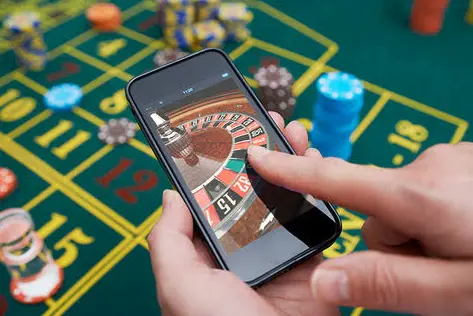
How the Multi Account Flag in USA Actually Fires
The Multi Account Flag in USA is not a single checkbox—it is a weighted scoring model that aggregates device-level entropy across sessions. Operators deploy fingerprinting scripts that harvest over 40 signals: canvas hash, font enumeration, timezone drift, WebRTC local IP leaks, hardware concurrency, and even the specific GPU string rendered through WebGL. When two accounts share a composite device hash above a 0.87 similarity threshold, the risk engine escalates. It does not ban you immediately—it shadow-limits your bet ceiling, voids your bonus eligibility, and queues your profile for manual review. The kicker? Most players never see the flag until withdrawal, when the account gets frozen mid-cashout. 😤

Canvas, WebGL, and the Fingerprint Collision Zone
Here is where the technical gloves come off. Anti-detect browsers marketed to USA players are fighting a losing war because modern detection stacks do not rely on a single vector. They cross-reference canvas noise against WebGL vendor strings and audio context fingerprints in real time. If your spoofed canvas says one thing but your GPU renderer screams another, the inconsistency itself becomes a red flag—operators weight anomalies heavier than matches. Shared device detection in USA live roulette environments is especially brutal because the live dealer stream embeds its own session token tied to your device clock skew. Two accounts logging in from the same physical machine will exhibit near-identical clock drift signatures within milliseconds, and no cookie wipe fixes that. 🎰
Why Residential Proxies Do Not Save You
Every forum guru screaming "just use a residential proxy" is handing out advice that died three years ago. IP reputation is now the weakest signal in the chain—operators know VPN and proxy pools intimately and treat IP as a confidence modifier, not a primary flag. What sinks multi-account operators is the device graph: shared fonts, identical screen resolution stacks, matching battery API readings, and the same Bluetooth device enumeration. The Multi Account Flag in USA system links accounts through these passive hardware breadcrumbs even when IPs, emails, and payment methods are fully separated. I have audited rigs where a single missing font package burned a twelve-account farm overnight.
Session Token Binding and the Live Dealer Layer
Live roulette adds a layer most auditors completely miss: the streaming session handshake. The dealer feed provider issues a session token bound to your device's media capabilities—codec support, hardware acceleration flags, and frame timing jitter. Two accounts sharing a device will produce statistically identical frame jitter profiles, and the provider passes that correlation back to the operator's risk dashboard. This is why shared device detection in USA live roulette tables outpaces detection on RNG titles by a wide margin. The stream itself is the fingerprint. Players running virtual machines think they are clever until the audio context fingerprint exposes the virtualized sound driver, which is a known high-risk signature.
Beating the Device Graph Requires Discipline, Not Toys
Real operators do not beat shared device detection with a single magic tool—they beat it with compartmentalized hardware, clean font stacks, genuine GPU diversity, and randomized clock drift. Rotating user agents inside one browser profile is amateur hour and will get your entire cluster flagged in a single sweep. The detection engines are patient, they correlate across weeks, and they love nothing more than a player who gets lazy after the first successful withdrawal. Treat every account as a physically distinct machine down to the audio driver level, or accept that the flag is already written against your device hash at a 0.91 similarity score.